
Monk fruit extract can add sweetness or support sucrose reduction, but the right format depends on the job sugar performs in the formula. High-intensity extract and bulk sweetener blends are not interchangeable. HuachengBio offers standardized extract and blends with carriers such as erythritol, allulose or dietary fiber; each requires its own taste, process and label review.
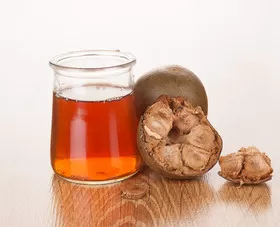
Monk fruit, or Siraitia grosvenorii, contains sweet mogrosides. Extract can help reduce sucrose's contribution to perceived sweetness, subject to sensory testing and market rules. It does not by itself make a finished product sugar-free, low-calorie or eligible for a nutrition claim; those outcomes depend on the complete recipe and local requirements.
Sugar also contributes more than sweetness: it can affect beverage body, and baked goods or confectionery texture, browning and structure. Replacing sweetness alone may leave the product physically different. Treat sweetness and sugar-function replacement as separate tasks.
A concentrated extract adds sweetness with little bulk; a blend combines monk fruit with a carrier or another sweetener. Each added component brings taste, solubility and labeling considerations. Choose the simplest system that meets the brief and validate it in the actual base.
Drinks are a logical screening point when the goal is sweetness adjustment without relying entirely on sucrose. HuachengBio presents monk fruit extract for food and beverage use, and its dedicated beverage application describes taste improvement, refreshing character, lasting sweetness and no effect on color. Treat these as application claims to test in your own recipe, not a guarantee across every pH, flavor system, process or shelf life. Compare the sweetened prototype with a control after the intended heat treatment and during the product's planned storage period.
For a clear drink, assess dissolution, clarity, color, aroma and aftertaste at the use level proposed by the supplier. For a powdered mix, test dispersibility and sweetness after the consumer's actual reconstitution instructions, not just in a concentrated laboratory sample. Acids, flavors, minerals and other sweeteners can change how the full system is perceived. Record the base recipe, addition order, processing conditions and tasting protocol so the sample result can be reproduced at pilot scale.
In flavored milk, yogurt-style products or other dairy applications, sweetness must sit comfortably beside dairy notes and any fruit, cocoa or vanilla flavors. HuachengBio's dairy application describes synergy with dairy flavors and reduced dairy odor. That makes a dairy prototype a relevant validation route, but buyers should still test their own fat level, protein system, flavor load, pH and process. A result in one dairy matrix should not be assumed to predict another.
Compare prototypes blind at matched sweetness. Score onset, linger, off-notes and dairy balance. If sugar also provides body, evaluate that separately: a high-intensity extract will not supply missing solids. Select a blend only after identifying the gap.
The monk fruit blend category is positioned for candy, drinks, solid drinks, tabletop use, health products and dairy products. HuachengBio describes versions with erythritol, stevia plus erythritol, allulose, dietary fiber and other compositions, with a stated sweetness range of one to four times sugar. That range is not a dosing instruction for every finished product; confirm the exact blend, sweetness basis and recommended use with the supplier, then validate against a sucrose control. Carrier choice may help address bulk or handling needs, but can also affect taste, cooling, texture, energy declaration and ingredient statement.
For confectionery, sweetness alone is not enough: solids, crystallization, water activity and cooking conditions may affect structure. Agree on application guidance and trial criteria; for tabletop use, check pouring, dissolution and consumer-measure behavior.
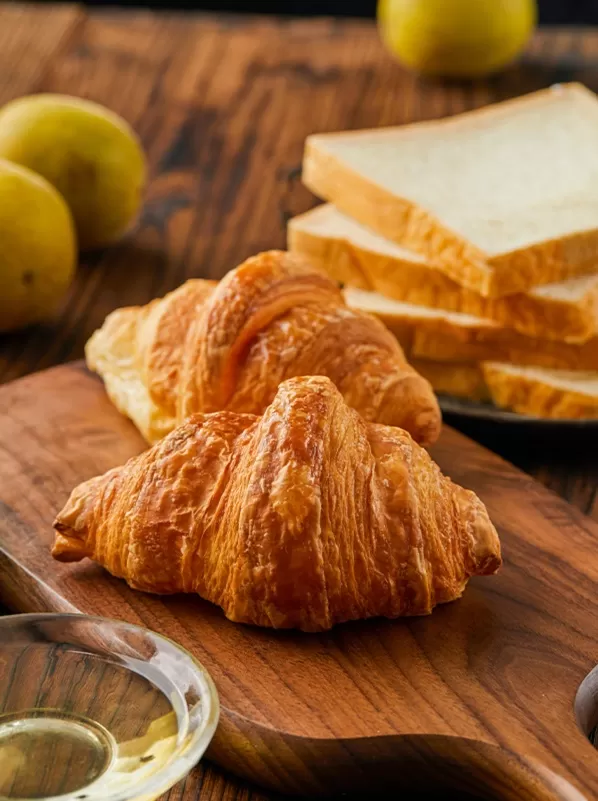
A high-intensity extract can sweeten a bakery formula, but it does not by itself replace sugar's mass or its contribution to browning and texture. A carrier-based blend may address some solids requirements, yet its performance depends on the specific recipe and process. Bench-test a reformulated product for batter or dough handling, spread, color, moisture, texture and finished flavor. Keep baking time, temperature and batch size controlled when comparing samples so that formulation changes are not confused with process variation.
For other processed foods, state whether the target is sweetness alone or also viscosity, bulk, stability or a label profile. Since public information does not establish use levels for every matrix, provide the full ingredient system and process before requesting a grade recommendation.
HuachengBio's H2-Luo Monk Fruit Extract is identified as a fruit extract with mogroside V as its active ingredient. Its product range states Mogroside V specifications from 1.5% to 98%, and the page's listed examples include 20%, 25%, 40%, 50%, 55% and 90%, assayed by HPLC. A standardized extract gives the formulator a defined concentration to evaluate, but concentration alone does not determine sensory performance or suitability. Confirm the exact grade, full composition, carrier status, color, solubility and specification for the commercial sample.
The H2-Luo Monk Fruit Blend Sweetener is a different starting point. The published options include erythritol, stevia with erythritol, allulose, dietary fiber and other blends. HuachengBio describes the category as having sweetness and use similar to sugar and gives a one-to-four-times-sugar range. Because the listed blends have different compositions, request the specific formula and its application guidance rather than treating “monk fruit blend” as one uniform ingredient.
| Development need | Starting point to evaluate | What to confirm |
|---|---|---|
| High-intensity sweetness with limited added solids | Standardized monk fruit extract | Exact Mogroside V grade, recommended use, sensory profile, solubility and full specification |
| Sweetness plus a carrier or more sugar-like handling | A specified monk fruit blend | Complete composition, sweetness basis, carrier function, dosage and label implications |
| Partial or full sucrose reduction in a structured product | Extract or blend selected after a prototype screen | Which sugar functions need replacing, process changes, sensory targets and acceptance limits |
This is a screening framework, not a substitute for the supplier's current specification or regulatory review. The most appropriate option may be neither a pure high-intensity extract nor a one-to-one blend if the formulation has a narrow flavor, texture or labeling target.
Before sampling, define the sucrose-reduction target, sweetness, acceptable aftertaste, properties to preserve, destination markets, serving size and intended claim. Compare a control with prototypes made under recorded conditions. A dose that works in water may not work in an acidic, flavored, protein-rich or heated base.
Record the grade, lot, dose, composition, formula and process. Test fresh product and relevant shelf-life points, checking beverage clarity, color and flavor or the texture attributes relevant to dairy and bakery. Repeat promising trials at a scale that reveals mixing differences.
Review regulatory suitability and label wording separately for each destination market. Request documents for the precise grade and intended use; have your regulatory team verify food-category conditions, ingredient declaration and claim rules. Nutrition claims must reflect the complete finished product and applicable local law.
For quality qualification, request the grade-specific specification and current certificate of analysis. Confirm the Mogroside V method, microbiological and contaminant limits, storage, shelf life and traceability. Ask how samples link to commercial lots and how changes are communicated. Confirm MOQ, lead time, packaging and certificates for the quoted grade in writing where these details are not specified.
Send the product matrix, target sweetness or sucrose reduction, process profile, destination markets, expected serving size and the physical or sensory properties that must be preserved. Ask HuachengBio to recommend whether a standardized extract or a defined blend is the more appropriate sample for screening, and request the exact grade specification and supporting documents before scale-up.
Contact HuachengBio about an applicationNot as a general rule. A high-intensity extract contributes sweetness, not the same bulk and functional properties as sucrose. HuachengBio describes certain blends as having similar sweetness and use to sugar, but the exact blend and application still need confirmation and a finished-product trial.
Start with the product brief. Evaluate a standardized extract when you need a concentrated sweetness input; evaluate the blend sweetener when a carrier-based system may better suit dosing or bulk needs. Confirm the exact grade, composition and recommended use with HuachengBio.
HuachengBio lists dedicated beverage and dairy application pages. These establish relevant application paths, not universal compatibility. Test in your own formula and process, including flavor, texture, stability and shelf-life requirements.
Request the exact ingredient composition and grade specification, current lot-specific certificate of analysis, recommended use for your matrix, storage and shelf-life information, and documentation relevant to the destination market. Provide your formula type, process, target serving and acceptance criteria so the supplier can assess a relevant option.







 EN
 EN
 CN
 ES
 PT
 SV
 DE
 TR
 FR
 AR
 BG
 HR
 CS
 DA
 NL
 FI
 EL
 HI
 IT
 JA
 KO
 NO
 PL
 RO
 RU
 CA
 TL
 IW
 ID
 LV
 LT
 SR
 SK
 SL
 UK
 VI
 SQ
 ET
 GL
 HU
 MT
 TH
 FA
 AF
 MS
 GA
 BE
 UZ